Overview
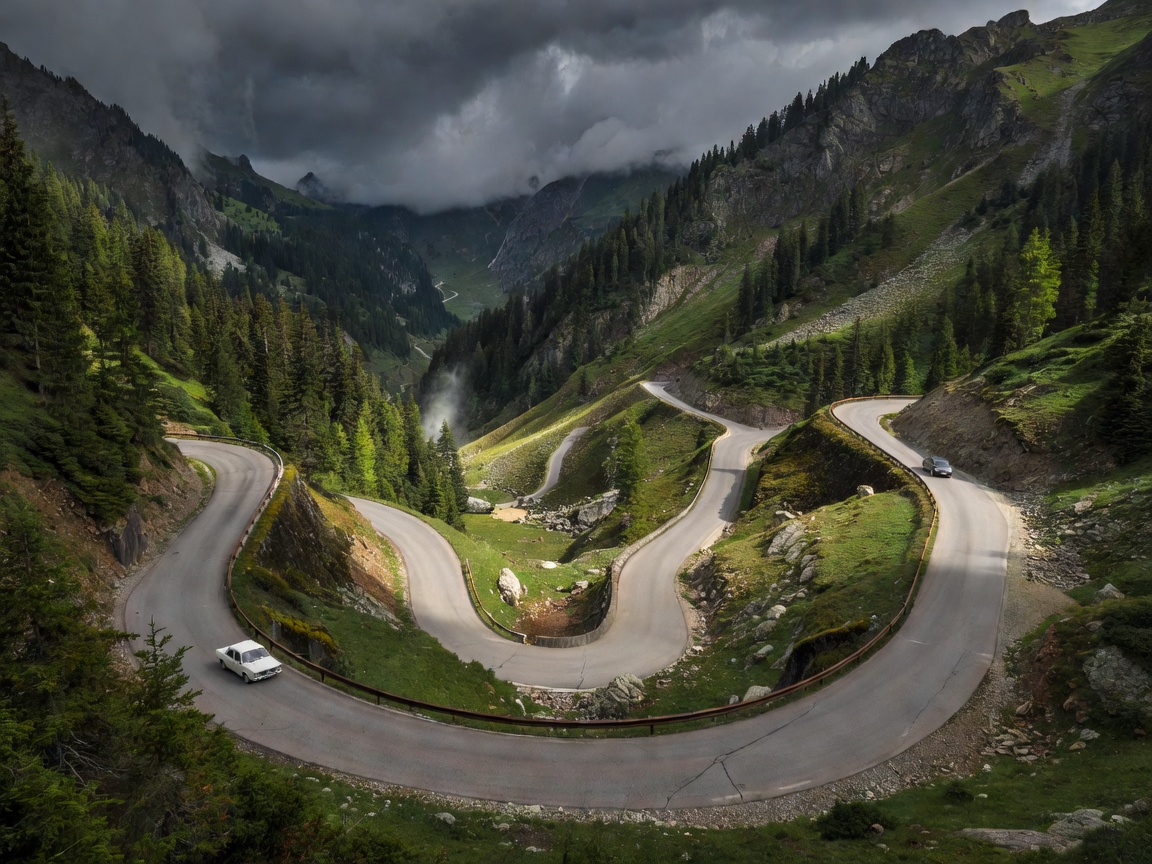
Carved into the sheer rock faces of the Făgăraș Mountains, the Transfăgărășan (DN7C) represents one of the most formidable engineering feats in Eastern Europe. Originally constructed as a strategic military route in the 1970s, it has evolved into a pilgrimage site for driving enthusiasts. Stretching roughly 56 miles (90 kilometers), this route tests every component of a sports car—from the thermal capacity of the braking system to the transient response of the dampers.
Unlike perfectly manicured alpine toll roads, the Transfăgărășan offers a rugged, raw driving experience. The tarmac quality varies wildly, heavily degraded by severe winter weather, which demands a suspension setup capable of absorbing mid-corner imperfections without unsettling the chassis. Low-slung supercars with minimal ground clearance will struggle here; this is the natural habitat for well-sorted hot hatchbacks, rally-replicas, and sports sedans with compliant damping.
The Route Breakdown
The Northern Ascent (Cartisoara to Balea Lake)
The climb from the north is the most iconic section, characterized by rapid-fire hairpins and short, punchy straights. The gradient is steep, demanding a car with strong low-end torque. As you approach the glacial Balea Lake at an elevation of 6,699 feet (2,042 meters), the sequence of switchbacks tightens. The retaining walls reflect exhaust notes brilliantly, but they also obscure sightlines. Drivers must read the vanishing point carefully, as blind apexes are common. The tarmac here is heavily patched—stiff rebound damping will cause skipping across the surface under heavy lateral load.
The Capra Tunnel and Southern Descent
Piercing through the mountain is the Balea Tunnel (the longest road tunnel in Romania), an unlit, damp, and atmospheric transit that emerges on the southern slopes. The character of the road changes instantly. The southern descent toward the Vidraru Dam features longer sweepers, faster entries, and significant elevation drops. Here, brake management is critical. The long runs between slower corners allow for high terminal speeds, necessitating heavy braking zones. Fluid boil and pad fade are genuine hazards on the southern leg if a driver relies too heavily on the middle pedal instead of engine braking.
Vehicle Setup & Preparation
To truly extract enjoyment from the Transfăgărășan, compliance is key. Track-focused coilover setups wound to maximum stiffness will lead to a punishing ride and a nervous chassis. The optimal setup features progressive spring rates and dampers backed off to allow the tires to track the undulating asphalt.
- Brakes: Upgraded fluid (DOT 4 or 5.1) is non-negotiable. High-temperature street-track hybrid pads are highly recommended.
- Tires: Leave the semi-slick track tires at home. The weather at altitude can shift from bright sunshine to torrential rain in minutes. High-performance summer tires with deep tread blocks (like the Michelin Pilot Sport 4S) offer the best compromise of dry grip and wet-weather safety.
- Cooling: The steep gradients and thin air at high altitude will test your engine's cooling capacity. Ensure radiators are clear of debris and coolant is fresh.
When to Go
The road is strictly seasonal. Due to heavy snowfall, it is typically open only from late June to late October. Even during the summer months, the peak tourist season brings significant traffic, including tour buses and slow-moving local vehicles. To experience the road dynamically, you must be on the tarmac by 6:00 AM. By 9:00 AM, the procession of sightseeing traffic makes spirited driving impossible. Mid-week in September offers the best balance of clear weather, manageable traffic, and accessible apexes.