Overview
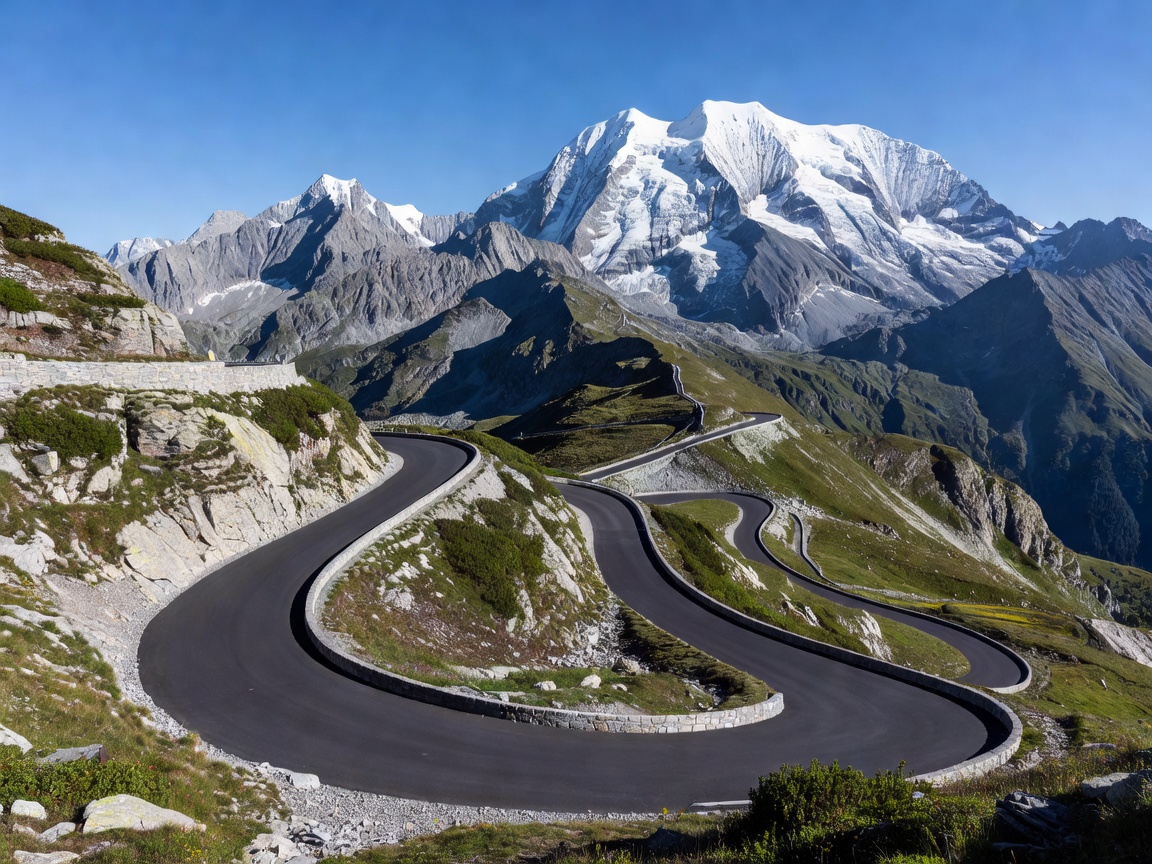
If the Stelvio Pass is a claustrophobic test of low-speed agility, the Grossglockner High Alpine Road in Austria is the exact opposite. It is a wide, sweeping, high-speed ribbon of immaculate tarmac that cuts through the Hohe Tauern National Park. Measuring 30 miles (48 km) with 36 grand turns, it climbs to an elevation of 8,215 feet (2,504 meters). Built in the 1930s specifically to draw tourism, its engineering reflects a focus on smooth gradients and wide radiuses, making it the perfect playground for grand tourers and high-horsepower supercars.
The surface quality is unmatched. Supported by a toll system, the road is constantly resurfaced, meaning drivers rarely have to contend with the mid-corner bumps or degraded asphalt found on the Transfăgărășan. This allows for stiffly sprung track-focused cars to exploit their aerodynamic grip and suspension geometry fully.
Dynamic Characteristics
High-Speed Sweepings
The primary joy of the Grossglockner lies in its flow. The corners are long, constant-radius sweepers that allow drivers to balance the chassis on the throttle for extended periods. It is an exercise in smooth weight transfer and managing aerodynamic downforce at higher velocities. The sightlines are generally spectacular, looking across vast valleys, which gives drivers the confidence to push the braking markers later into the corner entry.
The Edelweissspitze
The main route is smooth asphalt, but purists must take the short detour to the Edelweissspitze. This narrow spur climbs to the absolute highest point accessible by car (8,435 ft) and is paved entirely in historic cobblestones. The grip levels plummet here, especially if there is dew or frost. The tight, steeply banked cobblestone hairpins provide a jarring contrast to the sweeping main road, testing traction control systems and throttle discipline.
Vehicle Dynamics to Consider
Because the Grossglockner encourages a faster pace than other alpine routes, kinetic energy management becomes the primary mechanical concern.
- Braking Stability: The descents are long and fast. Trail braking deep into the sweeping corners requires a perfectly balanced brake bias to prevent the rear end from stepping out. Carbon-ceramic brakes find their true justification on descents like this.
- Aerodynamics: High-speed sweepers emphasize the need for stability. Cars with active aero or significant downforce profiles will feel planted and secure, minimizing the nervous front-end lift that can plague older sports cars at speed.
- Tire Compound: With excellent surface quality, softer compound tires can be fully utilized. However, ensure adequate camber to prevent obliterating the outer shoulders on the long, high-G corners.
Practical Considerations
As a toll road (approximately €40 per car), it maintains exceptional infrastructure, including wide run-offs in select areas and dedicated viewpoints that keep slower traffic out of the way of spirited drivers. However, it remains a major tourist artery. To fully experience the handling dynamics without interruption, one must arrive precisely when the toll gates open at 5:00 AM (or 5:30 AM depending on the month). The early morning light hitting the Pasterze Glacier while the flat-six engine echoes off the snowbanks is an indelible motoring memory.