Overview
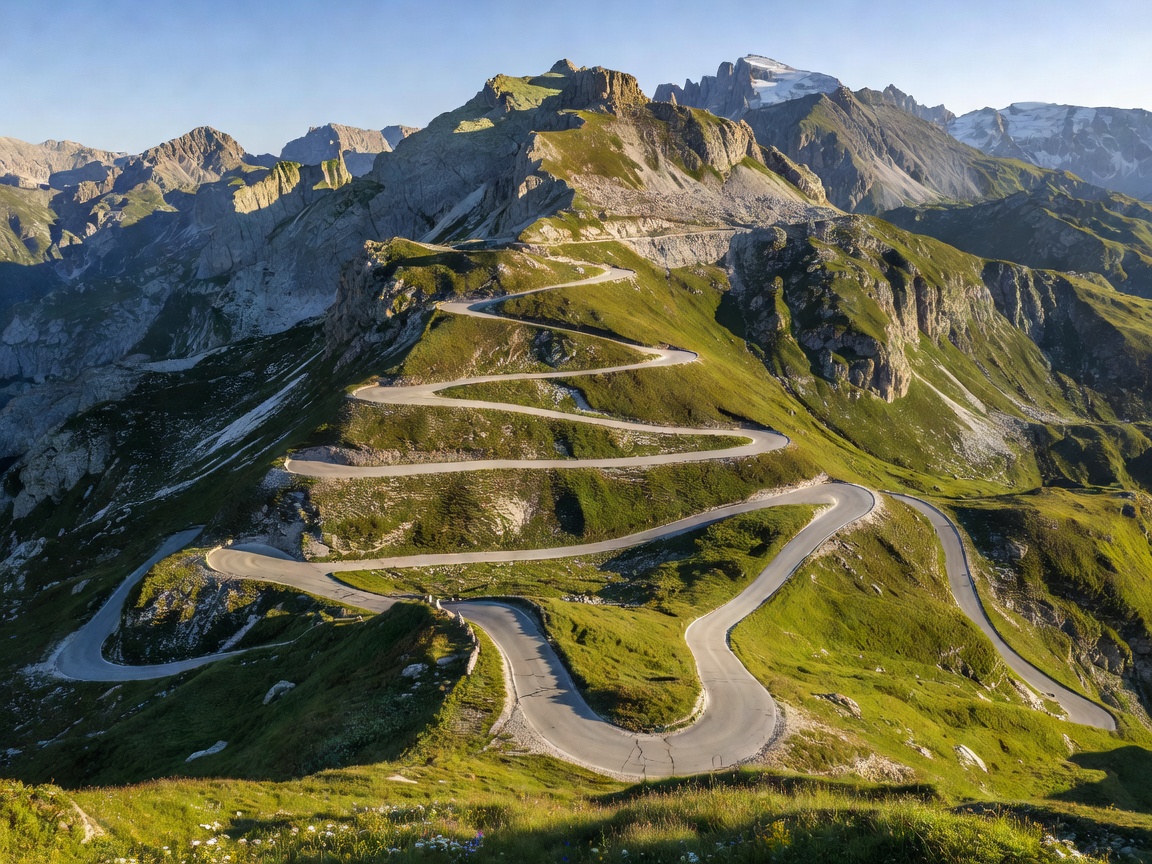
Sitting at an imposing 9,045 feet (2,757 meters) above sea level, the Passo dello Stelvio is the highest paved mountain pass in the Eastern Alps. It is visually arresting, a ribbon of asphalt draped down the side of a massive glaciated valley. For sports car purists, it is an essential right of passage, though it is fundamentally different in character from flowing roads like the Grossglockner. The Stelvio is about acute angles, extreme gradients, and precise weight transfer management at low speeds.
The pass is famous primarily for its northern face (approaching from Prato allo Stelvio), which features 48 numbered hairpins (tornanti). This is not a high-speed route. The technical challenge lies in managing traction out of extraordinarily tight first-gear corners while balancing the car against severe positive and negative elevation shifts mid-turn.
Driving Dynamics
The Northern Ascent (Prato side)
The climb from Prato begins deceptively smooth through thick forests before breaking above the tree line into the stark, rocky amphitheater that houses the famous 48 hairpins. The road here is narrow. The corners are tightly radiused and often steeply cambered. Rear-wheel-drive vehicles with limited-slip differentials will excel here, allowing the driver to pivot the car on the throttle at corner exit. Wide supercars will feel clumsy and constrained; nimble roadsters and short-wheelbase sports cars thrive in this dense, technical environment.
The Southern Approach (Bormio side)
Approaching from Bormio, the road features "only" 39 hairpins but offers a vastly different rhythm. The asphalt is generally better maintained, and the sections between the hairpins are longer and slightly more flowing. There are brief tunnels carved out of the rock face, and a spectacular waterfall section that demands driver focus over the distraction of scenery. The Bormio side allows for slightly higher terminal velocities, testing brake stability during deep trail-braking into the switchbacks.
Challenges and Hazards
The Stelvio Pass is a victim of its own fame. Its primary hazard isn't the steep drops—it's the traffic. In peak summer, the route is clogged with cyclists, motorcyclists, and large campervans that require the entire width of the road to negotiate the tornanti. A sports car caught behind a struggling motorhome on a 10% gradient will quickly suffer clutch or transmission heat issues if forced to slip the clutch repeatedly.
- Altitude Starvation: Naturally aspirated engines will lose up to 30% of their power output near the summit due to thin air. Forced induction vehicles maintain their performance much better in these conditions.
- Steering Lock: Some cars with high steering ratios and wide tracks may struggle to make the tighter hairpins on the northern face without crossing the center line, requiring careful lane management.
- Temperature Swings: At 9,000 feet, you can encounter snow flurries in August. The surface grip can halve in an instant when a cloud front moves across the peak.
The Ideal Strategy
To extract the real joy of the Stelvio Pass, timing is everything. You must aim to clear the Prato toll barrier before dawn. Tackling the 48 hairpins as the morning sun hits the Ortler Alps, with an open road ahead of you, is an unparalleled automotive experience. By 8:00 AM, the magic dissipates as the tourist traffic arrives, turning a dynamic driving route into a slow-moving parade.